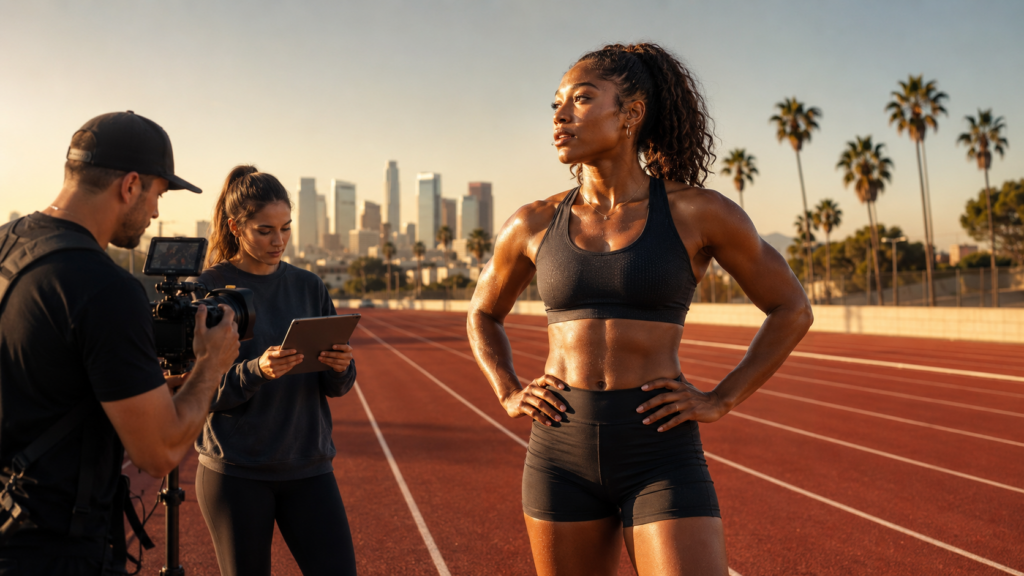
With the Opening Ceremony of the LA 2028 Olympic Games now on the horizon, companies across the country are asking the same question: how do we get involved in the biggest marketing moment of the decade without paying tens of millions of dollars for official sponsorship rights? For brands searching how to market during the Olympics without being a sponsor, or looking into Olympic athlete endorsement deals, the answer lies in a strategy that’s quietly powered some of the most memorable sports marketing campaigns in history: partnering directly with athletes instead of the Games themselves.
That’s exactly where CelebExperts, LLC and CEO Evan Morgenstein have built more than three decades of expertise. Long before LA 2028 became the biggest topic in sports marketing, CelebExperts was helping brands, from ambitious startups to Fortune 100 companies, build athlete partnerships and endorsement strategies that capture Olympic-level energy without the Olympic-level price tag, or the legal risk of unauthorized use of official marks.
This guide breaks down how non-sponsor brands can legally and effectively tap into the LA 2028 moment, and why companies across the country are turning to CelebExperts to make it happen.
Talk to CelebExperts about an LA 2028 strategy →
Why Official Olympic Sponsorship Isn’t the Only Path
Official sponsorship runs on a tiered system, with global “Worldwide Partners” like Coca-Cola, Visa, and Samsung at the top, then domestic organizing committee partners specific to LA28, then sport-specific and National Governing Body tiers below that. These packages carry enormous price tags, often tens of millions of dollars, putting official sponsorship out of reach for the vast majority of American businesses, including plenty of well-established mid-market and regional brands.
But being an official sponsor isn’t the only way to participate in the energy around the Games. Beneath the sponsorship ladder sits a completely legitimate, and often more cost-effective, path: partnering directly with individual athletes. This is where companies without a nine-figure marketing budget can still build campaigns that feel authentically connected to the Olympic movement.
The Legal Line: What Brands Can and Cannot Do
Here’s the distinction every brand needs before building an LA 2028 strategy: the Olympic rings, official terminology, and Games-specific marks are protected intellectual property, controlled by the International Olympic Committee, the U.S. Olympic & Paralympic Committee, and LA28 itself. Using these marks, or implying official association with the Games without a sponsorship agreement, is a real legal exposure, this is where ambush marketing crosses from clever into risky.
Individual athletes, though, are not the Olympics. They retain their own personal name, image, and likeness rights, separate from the institutional marks of the Games. That means a brand can build a legitimate, legally sound campaign around a real Olympic or Olympic-hopeful athlete’s personal story, training journey, and personality, without ever touching protected trademarks or claiming official sponsor status.
There’s an added nuance worth knowing: so-called “Rule 40” restrictions, which limit how active athletes can appear in advertising during a defined blackout period immediately around the Games unless the brand is an official sponsor. Outside that blackout window, and especially when working with retired Olympians, Olympic hopefuls not yet competing, or athletes in the years leading up to the Games, brands have considerably more flexibility. This is exactly the kind of constantly shifting legal landscape where expert guidance isn’t optional, it’s essential to avoid a campaign that generates legal risk instead of brand value.
This blog is intended as general marketing guidance, not legal advice. Any brand building an Olympic-adjacent campaign should consult qualified legal counsel to review specific plans against current Rule 40 guidelines and USOPC/LA28 trademark policies.
CelebExperts and Evan Morgenstein’s 30+ Year Foundation in Olympic Sports Marketing
Evan Morgenstein’s career in athlete representation and sports marketing started well before “NIL” or “influencer marketing” were part of the business vocabulary. His path included representing elite Olympic athletes, and the origin story of his consulting career ties directly back to the Games themselves, a moment during the 2008 Beijing Olympics where he found himself representing nine medal-winning athletes at once, which led him to build what became CelebExperts: a strategic consulting partner built to understand athlete representation and brand marketing objectives at the same time.
That dual expertise, what makes an athlete’s personal brand compelling and what a company actually needs to hit its marketing goals, is the foundation CelebExperts brings to every LA 2028 engagement. Over more than 30 years, Morgenstein has worked directly with athletes, sports governing bodies, and brands to build campaigns with genuine cultural relevance, not campaigns that just borrow Olympic imagery and hope no one notices.
Why Athlete Partnerships Work So Well for Non-Sponsor Brands
Some of the most iconic sports marketing campaigns in history were never built by official sponsors at all. Brands that couldn’t or wouldn’t pay for sponsorship have found real success building around individual athletes’ personal stories instead, proof that consumer connection often comes from the athlete’s journey, not Olympic rings on a billboard.
Athlete partnerships bring real advantages over chasing official sponsorship. Lower cost of entry, since individual partnerships can be structured at a fraction of a Games sponsorship, making Olympic-adjacent marketing accessible to companies of nearly any size. Authentic storytelling, because consumers respond to an athlete’s training, setbacks, family sacrifices, and hometown roots often more powerfully than institutional sponsorship messaging. More creative flexibility, since athlete partnerships aren’t bound by the same rigid brand guidelines that come with official sponsorship agreements. Long-term relationship potential, because the partnership doesn’t have to end when the Games do, some of the strongest brand-athlete relationships continue well past a single Olympic cycle. And regional relevance, since with the Games hosted in LA, brands based in Southern California or the broader West Coast have a real opportunity to partner with local athletes whose stories carry extra weight with hometown audiences.
How CelebExperts Identifies the Right Athlete for Any Brand
One of the hardest parts to replicate about what CelebExperts and Evan Morgenstein bring to an Olympic marketing strategy is identifying precisely the right athlete for a specific brand, budget, and goal. This isn’t picking whoever has the most followers. It requires understanding the brand’s target audience, values, and category, the athlete’s personal story, sport, and public persona, timing relative to Rule 40 and the Games calendar, whether the athlete is active, recently retired, or an emerging hopeful, budget realities and how to structure a deal that delivers real value without overpaying for name recognition alone, and long-term fit so the partnership can extend beyond a single campaign or cycle.
This matchmaking draws directly on Morgenstein’s decades working with sports governing bodies, athlete management, and brand consulting simultaneously, a combination almost no other consultant in the industry has built at this depth. Where many marketing agencies understand branding but not the athlete ecosystem, and many athlete agents understand representation but not brand strategy, CelebExperts operates at the intersection of both.
Building a Compliant, High-Impact LA 2028 Strategy
The process CelebExperts guides clients through typically includes strategic discovery to understand the brand’s goals, audience, and appetite for an athlete-led campaign, athlete identification and vetting to match brand objectives with athletes whose story and sport genuinely align while reviewing reputational and availability considerations, legal and compliance review to structure the partnership around Olympic trademark protections and Rule 40 timing in coordination with the brand’s counsel, deal structuring and negotiation to build fair, transparent terms for both sides, campaign and content strategy across social, PR, personal appearances, and paid media, and activation and measurement to execute and track impact against the brand’s original goals.
Frequently Asked Questions
Can a brand legally use an Olympic athlete in advertising without being a sponsor? Yes, athletes retain their own name, image, and likeness rights separate from Olympic trademarks. Brands just need to avoid using protected Olympic marks or implying official sponsorship, and stay aware of Rule 40 timing restrictions around the Games themselves.
What is Rule 40 and how does it affect Olympic marketing? Rule 40 restricts how active athletes can appear in advertising during a blackout period immediately around the Games unless the brand is an official sponsor. Outside that window, and with retired or not-yet-competing athletes, brands have considerably more flexibility.
Is ambush marketing legal during the Olympics? It depends entirely on execution. Using Olympic rings, official terminology, or implying sponsorship without an agreement creates real legal exposure. A campaign built around an individual athlete’s personal story, without touching protected marks, is a different, legally sound path.
How much does an Olympic athlete partnership cost compared to official sponsorship? Official sponsorship packages often run into the tens of millions. Individual athlete partnerships can be structured at a small fraction of that, making Olympic-adjacent marketing realistic for companies far outside Fortune 100 budgets.
Final Thoughts
LA 2028 represents a once-in-a-generation marketing opportunity for American businesses, but official sponsorship is neither the only path nor a realistic one for most companies. Athlete partnerships offer a legally sound, cost-effective, and often more authentic way to connect with the excitement of the Games, provided they’re built correctly and with a clear understanding of Olympic trademark and Rule 40 considerations.
With more than 30 years at the intersection of athlete representation, sports governing bodies, and brand strategy, Evan Morgenstein and CelebExperts, LLC have positioned themselves as a trusted partner for companies of every size figuring out how to be part of the LA 2028 moment the right way, capturing real Olympic energy, connecting with the athlete whose story truly fits their brand, and doing it without the price tag or the legal risk of chasing official sponsorship.
Start Your LA 2028 Athlete Strategy →
Fill out the form with your brand, budget, and timeline, and the CelebExperts team will follow up.