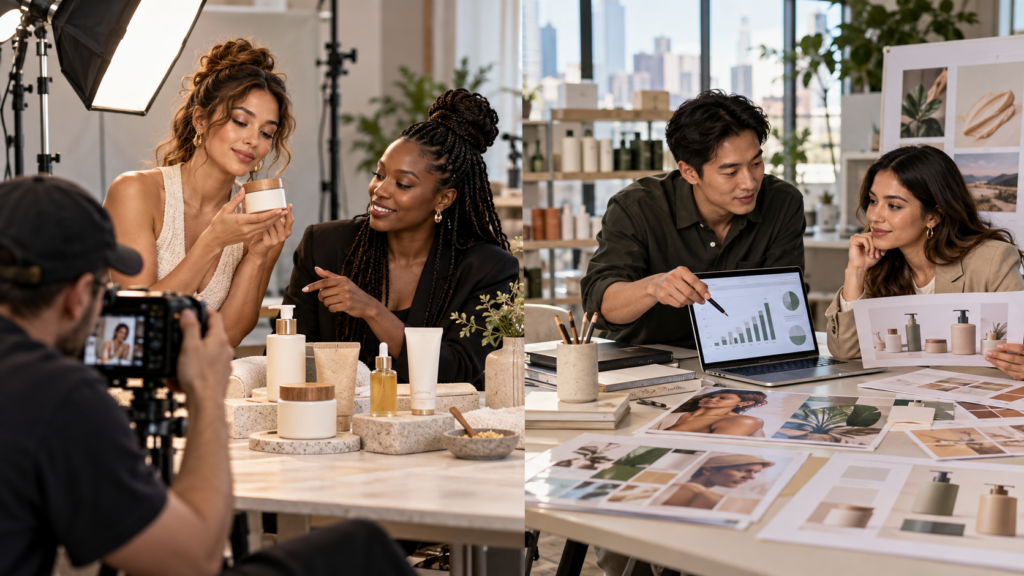
Every CPG founder eventually hits the same budget question: where should limited marketing dollars actually go? Traditional channels like paid social, influencer campaigns, retail promotions, and digital advertising offer predictable, scalable playbooks. Celebrity partnerships offer something different, outsized visibility, instant credibility, and the potential for a compressed growth timeline, but at a higher upfront cost and with more variable outcomes. Here’s how the two compare for CPG brands, and how to figure out where your next marketing dollar works hardest, with guidance from CelebExperts, LLC, a corporate consulting firm built for CPG entrepreneurs and startup teams.
What Each Approach Covers
Traditional marketing for CPG brands usually means paid social and digital advertising, influencer marketing with mid-tier or micro creators, retail trade promotions and in-store marketing, content, SEO, and email, and PR and organic media. Celebrity partnerships usually mean brand ambassador relationships, celebrity investor or advisory equity arrangements, single-campaign endorsement deals, and co-branded product collaborations. Both can drive real growth, but they run on different timelines, cost structures, and risk profiles.
Speed of Impact
Traditional channels tend to deliver measurable results fast, often within days or weeks, because you can launch, test, and optimize in near real time. Celebrity partnerships take longer to activate, since contract negotiation, content production, and planning can run weeks or months before launch. Once they’re live, though, the impact can hit harder and faster, especially around press coverage, retail buyer interest, and an initial awareness spike.
Cost and Scalability
Traditional marketing offers a more predictable, scalable cost structure. You can adjust budgets incrementally, test small before a big investment, and optimize on real-time data. Celebrity deals usually require a larger upfront commitment in cash, equity, or both, with much less ability to test small first. That makes them a bigger bet, but one that can pay off disproportionately when the fit and execution are right.
Credibility and Retail Buyer Impact
Influencer and digital marketing build trust incrementally through repeated, authentic exposure. A well-matched celebrity partnership can establish credibility almost instantly, which is especially valuable when you’re trying to win retail buyer confidence or investor attention quickly. This shows up most in retail. Category buyers are buried in pitches from emerging brands, and a credible celebrity partnership can shorten the sales cycle, justify shelf space for a smaller brand, and give retail marketing a compelling story. Traditional digital marketing has less direct pull on retail buyer decisions.
Risk and Variability
Because traditional channels are so measurable and adjustable, you can manage risk incrementally, scaling what works and cutting what doesn’t with low sunk cost. Celebrity deals carry more variability. A strong partnership with genuine category fit can dramatically beat expectations, while a mismatched or poorly activated one can underperform badly relative to its cost.
Which Should You Prioritize?
Most successful CPG brands eventually use both, and the right sequencing depends on stage. Early on, at pre-seed and seed, traditional marketing is a lower-risk way to test messaging, validate product-market fit, and build early traction. At growth stage, once you’ve validated fit and can handle demand spikes operationally, a celebrity partnership can accelerate things, particularly for unlocking retail distribution. At scale, brands often run celebrity partnerships alongside a mature marketing engine, with the celebrity relationship anchoring brand equity while digital and retail drive ongoing volume.
Integrate, Don’t Choose
The strongest strategies don’t treat these as competing budget lines; they integrate them. Use traditional digital to amplify and extend a celebrity partnership launch. Run celebrity content across paid and organic channels. Use the retail credibility from a celebrity partnership to justify more trade marketing investment. And apply performance data from traditional channels to inform which celebrity partnerships are likely to resonate.
The Mistakes to Avoid
Treating a celebrity partnership as a replacement for, rather than a complement to, traditional marketing. Committing to a celebrity deal before validating product-market fit. Underinvesting in activation once the deal is signed. And ignoring retail buyer impact when you evaluate ROI.
Why CPG Founders Turn to CelebExperts, LLC
Deciding how to split marketing investment between celebrity partnerships and traditional channels takes a clear-eyed, strategic evaluation. You get stage-appropriate guidance on whether you’re ready for a celebrity partnership or should prioritize traditional channels first, integrated growth planning that combines both, retail-focused expertise on how celebrity credibility moves buyer decisions, risk-conscious deal structuring, and founder-first guidance that won’t push you toward a celebrity deal when traditional marketing is the smarter near-term move.
There’s no universal answer to whether celebrity partnerships or traditional marketing drive faster growth; the right call depends on your stage, budget, and goals. If you want to make it strategically rather than reactively, talk to CelebExperts, LLC about putting every marketing dollar to work.